Thursday, February 4, 2016

Book Review: BIG MAGIC, CREATIVE LIVING BEYOND FEAR by Elizabeth Gilbert

This book has earned a permanent place on my desk. It keeps good company with Stephen King’s ON WRITING, and Blake Snyder’s SAVE THE CAT series as well as a few other beloved titles. In BIG MAGIC, you will not find one lesson on grammar or usage. There's no talk of fleshing out characters, or how to rescue that ever sagging second act. This book is about the magic of ideas and the joy of choosing to live a creative life. 

Her thoughts about what ideas actually are was a little hard for me to swallow at first. But as I kept reading, I realized how right she is. Ideas, or the Muse, or the Universe, wants its stories told, its art created. After she explained how she came to believe this, I embraced her theory because I too, have had similar experiences. When I was writing what would become my first published story, I remember pausing, deciding on a word. But as I typed it, my finger twitched, hitting the wrong key. That twitch created a different word than I had intended, and ultimately, changed the entire direction of the story. I’ve also had dreams of characters and stories, and amazing synchronicities (See My Own Real Life Example of Big Magic, below). All of this, Liz says, is normal. It’s the intention of Ideas and by living a creative life, these experiences are likely to happen to you, too. 

And what about that living beyond fear part? Well, Liz climbs into your brain and lays out all of your fears about your artistic ability as well as your fears about success and failure. She then gives you a rough road map on how to live with fear. Because, unfortunately, fear is not going anywhere. But it also doesn’t have to be the loudest voice on your journey. 

Throughout the book, Liz shares many beautiful anecdotes about the joys and pitfalls of living a creative life. She talks about how artists lose and re-gain their creativity (and how you can too!) and that being blocked is a normal part of the process. She also addresses the darker side of artistry and how NOT to live a creative life. She discusses whether or not graduate school is worth the investment (Spoiler alert! The answer is, no), and the common pitfalls that lead one into the life of a ‘tortured’ artist. She also talks about treating your creativity as someone you love and respect. She writes:

“Every time you express a complaint about how difficult and tiresome it is to be creative, inspiration takes another step away from you, offended.” 

She also says you shouldn't demand your creativity to support you financially. If it does, that’s great, but if you expect too much of your creativity, it might not bother to visit. And, as she says that each of us are meant to express creativity, it would a tragedy to scare it off. 

At times, it felt like I was being beaten over the head with the same message, which almost made me stop reading, but I’m glad I didn’t. The anecdotes at the end were too funny and inspiring to miss. This is a book that will make you laugh, give you a hundred new ways to befriend your creativity, and stoke your ambition. I highly recommend BIG MAGIC, CREATIVE LIVING BEYOND FEAR.  


My own real life example of Big Magic:

Years ago, when I wrote picture books, my daughter came up with the most brilliant character name ever. That name, Carolina Carrotworks, unleashed a super-fantastic idea for a book. I rushed to my laptop and started writing. Carolina had an amazing amount of hair that could do things all by itself. And it wasn’t always well behaved. In fact, kindergarten was quite a nightmare. It was a funny story. And I was completely enchanted. When I finished, my critique partners loved it. My family loved it. And, after many revisions, I still loved it. So, I took the next step and starting drafting a query letter. 

Before I could mail it off, however, my mother-in-law called. “I need to come over,” she said. “Today.” Now, my mother-in-law lives an hour away so if she’s going to make this trip to tell me something, it was not likely to be good news. When she arrived, she looked heartbroken as she held out a book to me.

It was a picture book. With MY story in it. The one I had just finished writing the query letter for. This book had been recently released by a different author, and… it was beautiful! Oh, there were some differences, of course. But mostly, it was the same story. Even the hair color was the same (red). My first thoughts were a less polite version of, “GOLLY GEE! WELL, DARN!” 

But then I checked out the author and nearly fainted. Not only was it someone well known, but someone whose work I deeply admired.


I started to laugh. And cry. Because the Muse or Idea Goddess that talked to me also talked to other authors that I loved! So here I was, holding this book, laughing and crying and babbling about muses, and my mother-in-law, clearly thinking that her son had married a lunatic, took several steps back and reminded me that this was, in fact, a library book and that I probably shouldn’t cry on it. But holy mother of amazing! My story had made it into the world - just… not through me. 

I was a little mad, but I also saw it as a clear sign that I was on the right track towards publication. My ideas were solid. And my execution was too - as the structure and rhythm of both books were similar.

That, Elizabeth Gilbert would say, is Big Magic at work. 


I can’t help but agree. 

Thursday, January 21, 2016

Book Review: SOME KIND OF COURAGE by Dan Gemeinhart

Joseph Johnson is on his own. He’s lost his mother and sister to typhoid and his father in an accident. All he has left, is his horse, Sarah. But when Sarah is stolen and sold to a horse trader, Joseph decides to go after her - no matter how long it takes, or how far he has to go. After all, Sarah is the only family he has left. 

If you are looking for a BOY HAS AN EPIC ADVENTURE story, this book is for you! It’s full of sticky situations and great escapes that will keep you turning the pages at a fast clip. But SOME KIND OF COURAGE is so much more than that. It is also about the very roots of friendship and family. At the beginning of his journey, Joseph meets a boy named Ah-Kee. Ah-Kee is also alone and searching for something, but as he speaks only Chinese, Joseph and Ah-Kee can only communicate through gestures and facial expressions. Through their adventures, they learn that true friendship isn’t based on words at all, but on kindness and trust. 

While there is much joy in this adventure, the loss of his family weighs heavily on Joseph’s heart. The only link to his past, the only one he loved as much as his family, is his horse, Sarah. But once he is reunited with Sarah, would that be enough family? Joseph must decide what family means to him as he and Ah-Kee chase the horse traders across Washington state. 

This book is told from Joseph’s point of view and he is a highly entertaining narrator. Dan Gemeinhart never overburdens the reader with long passages of description, but effortlessly shows his love for his home state through Joseph’s eyes. He includes the right amount of details to make the story feel authentic in its historical setting. 

I highly recommend SOME KIND OF COURAGE. It’s a story that will make your heart break, your soul sing, and your belly ache with laughter.  

Thursday, January 7, 2016

Book Review: RUBY REINVENTED by Ronnie Arno


Ruby seems to have it all - a huge house, celebrity parents, and designer everything. But having it “all” isn’t as easy as it seems. The paparazzi ruin any attempt at family outings and even worse, the kids in Ruby’s school only pretend to be friends with her just so they can meet her famous parents. Ugh! What does a girl have to do to be normal?

Ruby decides that the only way to be a normal kid is to move to the other side of the country and go to boarding school. When she arrives at her new school in Maine, she reinvents herself creating a new story about her past and her family. For a while, the lies seem to pay off - Ruby’s friends like her for who she is and when they find out she makes her own dresses, they think she’s a talented fashion designer! Ruby can’t ever remember anyone saying that she was talented before!

Encouraged by her best friend, Summer, Ruby enters the dresses she’s made into a school-wide contest but as she prepares for them to be displayed in a fashion show on Parents’ Weekend, one of her lies start to unravel. Can she keep her friends by hiding the truth? Or… would they like her anyway?


I love this book! Ruby is a delightful character - she is genuine and honest… oh wait! Did you read about that part where she invents a new past for herself? Okay. Except for that gigantic lie about who she is, Ruby is genuine, warm and funny. And who can blame her for wanting to be her own person and not always stuck in the shadow of her parents’ stardom? At her new school, Ruby meets Summer, who becomes her first true friend. Summer delights in mismatched clothes, jumping on beds, and encourages Ruby to keep designing dresses. She even teaches Ruby what it is to be a best friend and what family really means.

I highly recommend RUBY REINVENTED! This middle-grade book is fast-paced, beautifully written, and sprinkled with humor - all while exploring serious topics such as loyalty and the nature of both families and friendships. 

My only word of caution: Don’t be surprised if after reading this book, your child begs to be sent off to boarding school in Maine! 

Wednesday, October 28, 2015

NaNoWriMo Starts in FIVE days! Are You Ready?

I admit, I am no where near ready for NaNoWriMo this year. I've got a great setting, a few strong characters, and a story that I love. Plus, I've been doing tons of research. In the past, this would have been enough for me. I'd take these elements and see where they'd lead. I'd always end up with a sort-of story. It'd have a great beginning, a muddy middle, and an ending that didn't quite add up. Though I never regretted it because I learned a lot about my characters and what their story was... and wasn't.
Plus, by the end, I had a draft of a novel! Which is super exciting. It's even more exciting at the end of November because I'm finishing my draft around the same time as many of my friends are finishing theirs. It's the best part of NaNoWriMo!


But this time around, I want more. I want to come to the end of November with a coherent story. It's okay if the writing is horrible. In fact, writing at the NaNo pace, it's unavoidable. But that doesn't bother me because bad writing is also one hundred percent fixable. What I don't want, is another meandering text - chapters, scenes that were born just because I needed the word count. To avoid this common pitfall, I'm spending a serious amount of time thinking about my plot and learning  my characters' flaws and motivations.

So what's my game plan? This year, I'm outlining my novel using the plotting concepts in the SAVE THE CAT series by Blake Snyder. While I have not read SAVE THE CAT GOES TO THE MOVIES, I did find the last book, SAVE THE CAT STRIKES BACK to be even better than the first.

These books are intended for screenwriters, but the elements of a novel are not all the different. No matter what your medium, Snyder's advice is invaluable. He has mind-blowing tips on character development and story tricks that will strengthen any manuscript. But the true gem of his work is his ideas on structure. Snyder beautifully explains what needs to be present in each of the three acts and how to map them out on his famous Beat Sheet. He further teaches you how to use index cards to make sure that your storyboard not only makes sense, but that the pacing is solid. Doing all this work before you start drafting gives you an edge because by the time you are done writing, you don't have a typical first draft. Your writing may be messy, but the storyline makes sense because all the important plot points are in the right places. How cool is that? Writing 50,000 pre-planned words in a month doesn't seem quite so daunting.

The scary part, of course, is getting all those plot points lined up before November 1st. It's difficult and frustrating work. But what I like about it, is that if something isn't working, I've figured that out on a notecard, not after writing an entire scene or chapter. But what if, you ask, a character does something unexpected? What if your characters get into an unplanned fight and now they won't talk to each other?

It does stink when half of your storyboard is wrecked. Unfortunately, unforeseen events do happen. But then you can scribble out a few scene cards to see if you like this new direction. Maybe it's better. Maybe it's not. You no longer have to keep writing in that vein just to find out. Snyder's method helps you develop a map of your novel, but you are still free to take take detours.

NaNoWriMo starts in five days, but my Beat Sheet still has holes. My bulletin board is bare and my notecards are in a neat stack on my desk. I'd hoped to be finished with this by now and to be preparing my home for a month of near-neglect. Instead, I'm brainstorming and planning out my plot points. Because this year, I know what I want out of NaNoWriMo. And I'm going after it.

Wednesday, June 17, 2015

Mindfulness and Creativity


A lot has been going on with me this year - the kind of things that forced my writing to the back burner for awhile. While the stress hasn’t let up, I cannot ignore my work any longer. It feels like I will fall apart if I don’t sit down and tell some stories. I remember thinking that Stephen King’s quote, “Life isn’t a support system for art. It’s the other way around,” was a beautiful idea. Now I know how very true it is.

I finally sat down at my desk, but the words wouldn’t come. So, I did all the usual things I do when I get writer’s block - I read, I tried writing prompts, I lit candles… but the words that arrived were stilted and forced. I was crushed. And a little scared. What if this was permanent? Nonsense, I told myself. The words will come. But maybe… I should think about rebooting my imagination.

I wasn’t sure how to do that, but I did realize that stress was probably part of the problem. I decided to focus on mindfulness. I’d been so wrapped up in the overwhelming amount of things that I needed to accomplish, that I’d go through each chore, focused on what I had to do next. I rarely took time to pay attention to the task at hand. If I was gardening, I’d think about how I still had to wash the breakfast dishes.
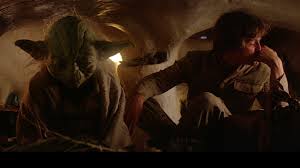
I could just picture Yoda pointing his finger at me and telling me that my mind was never on where I was or what I was doing. It was definitely time for a change. I’d heard that practicing mindfulness would help reduce my stress, but could it also help revive my imagination? The answer is, yes!

The best example, is what happened when my schedule changed and I had to drive nearly eighty miles a day. Obviously, mindfulness is a part of driving so I wasn’t planning to practice it behind the wheel. It turned out, however, to be the best place to use mindfulness to boost my imagination.

There is one stretch of road that I absolutely love. It’s a two lane highway through woods, grasslands, and marshes. There is not one stoplight, store, or business for six miles. There isn’t even a farm stand in the summer. It is fast, a little curvy, and comes with a few hills. Pared with emotionally stirring music, it easily makes my list of all time favorite roads to drive. The trees, the blowing grasses, the shadows… even the telephone poles look dramatic when set to the the soundtrack from INCEPTION, or DIVERGENT. 


But when I hit that stretch of road during morning rush hour, I was dumbfounded by the traffic. Sure, the merge would be bad, but once that was over, why wouldn’t we all just fly down the road like usual? It’s still a mystery.

It was agonizing, crawling down the road that first day. But a day or two later, I remembered to be mindful. After all, frustration wasn’t going to improve anything. The only thing that could improve was my attitude. So, I let go of my frustration, and began to pay attention to my surroundings. At this pace, I could pay attention to individual plants that grew along the roadside. I saw that one type of grass had rusty seed heads while another’s were black. I noticed the grassland wildflowers and the cattails of the marshes. I could smell the plants still wet with dew, and listened to the birds. I noticed how the sunlight gave the telephone wires a slivery glint. I noticed a discarded oil can on the side of the road, a patch of wild asters growing around it. I imagined the flowers grew there on purpose - just to defy our human litter. 

I fell  in love with this road again - in a whole new way.


This experience helped spark my creativity because I spent fifteen minutes of my day finding beautiful things that moved me. I also spent part of that time imagining myself hiking through those woods and grasslands - or living there as a wild animal. By noticing and imagining, I was re-opening my heart to the natural creativity of our world. And I wanted, in my own small way, to add to it.

When I was home, and found a few scraps of time to be at my desk, I wrote. In three weeks, I had written over seven thousand words. Compared to a few months of nothing, that was a big deal. 

Currently, I’m writing at a pace that I’m happy with, although I’m still not meeting my old word count goals. But for now, that’s fine. I’m just grateful that I’m writing almost every day. Two days ago, my schedule changed yet again, moving my drive back by an hour. While there are many benefits to this new schedule, I am truly grieved to lose the opportunity to practice mindfulness as I slowly drive through the country.

On this hazy morning, the sun was an eerie red due to wild fires in Saskatchewan, Canada


Friday, January 16, 2015

Unicorns, Ukuleles, and Other Things Writers Fear

I recently went out for coffee with one of my writing friends. She’s someone I’ve mentored for a number of years and as I read over her current chapter, I gave her several writing prompts to help her flesh out her villain.
Her chapter was shaping up nicely, but it was the results of her free writing that floored me. Her language was strong. Passionate. Words and phrases fell into place as if she’d worked on this exercise for months instead of minutes.  

“You need to keep writing, this way,” I said, pointing to her notebook. “Allow yourself to vomit up words without stopping to edit yourself all the time.”

She grimaced. “Yeah, but if I did, I’d probably end up with a ukulele playing unicorn somewhere in my story.”

I laughed. “That’s what editing is for,” I told her.

She leaned forward, her face serious. “Right. But what if I don’t find it? What if it goes to print and I never knew it was there?” she asked.

I was about to assure her that I would never let her publish a book with a ukulele playing unicorn in it, when I realized the heart of what she was really asking.
What if my book goes to print, and I think it’s good, but really… it’s awful?
This is the fear that stops many writers dead in their tracks. It’s the fear of mistakes. And failure. The fear of negative reviews. And the fear of public rejection. The truth is when you send your work out into the world, you are putting a large piece of yourself out there. Your work (and you), will be judged.

I looked back at my friend. “I trust you,” I said. “I trust you to see the unicorns. And I trust you to edit them out.”

I wished I could give her a magic formula - tell her that if she’d follow rules X,Y, and Z and divide by pi, her work would be perfect and immune to criticism. But there is no such formula. There is only courage, trust, and hard work (work includes but is in no way limited to: writing, researching your market, revising your novel, spending endless hours studying craft, realizing your novel needs a complete rewrite and spending the next day hiding under the bed, reading hundreds of books, re-writing and revising, learning self-promotion, becoming part of the online writing community, buying more notebooks and sticky-notes, following agents and editors online to see who publishes or represents novels in your genre, joining a serious writing group who gives more revision suggestions, melting down, Facebook, Twitter, Snapchat, Pinterest, Instagram, revisions, and querying/submitting). If you have put in the work, you can trust that you are professional. You know your craft well and have honed your story to the best of your ability. Finally, the time has come to gather your courage and share your work with agents, editors, and finally (after another few rounds of revisions), readers.

And what if, after all your hard work and diligence, there’s STILL a ukulele playing unicorn in your book? Well, when the trolls track it down and gleefully show you where it’s lurking, just smile and say, “Well done! And be sure to look for him in my NEXT book!”

Jo

Friday, October 31, 2014

November - The Most Wonderful Time of the Year (For Writers)

Tomorrow is the start of National Novel Writing Month (NaNoWriMo) and I'm working hard to get ready. I'm deep cleaning the house, stocking the pantry, and baking up a storm. By the end of today, there should be enough breakfast muffins in the freezer to get my family though November. Why all this holiday-like craziness?Because starting November 1st, I will be joining the global community of NaNoWriMo. It's a month long marathon of writing. The goal is to write 50,000 words (roughly 200 pages) of a novel in one month. 

It's a lot fun - in the way that a cross country race is fun - it's both exhausting and exhilarating. I will be too busy to wash the floors or bake chocolate-oatmeal cookies. But I will love nearly every minute. Even the ones where I’m pulling my hair out in frustration. I love it because I get a lot of work done and some of my best plot twists have come out of a NaNo month.
Here’s why NaNoing is helpful:

1) Loss of Perfectionism. Be honest. How often do you stop moving forward on your book because you didn’t like how a sentence came out? How many times have you revisited CHAPTER ONE because you just know if you get this chapter right, the rest of the story will be easier? During NaNoWriMo, there isn’t time to stress about word choice. In fact, words and phrases like, thing-a-ma-bob and that-part-of-a-plant-that-bees-land-on-and-I-just-can’t-remember-because-of-ALL-THE- COFFEE! will turn up in your novel. And that’s okay. Because you’re going to revise. The point is, after the first few days and you start falling behind, you’re going to push past your perfectionism. You will have no choice but to let your creativity go and write the story. 

2) A Boost In Creativity. Guess what happens when you lose your perfectionism? You have more freedom to create. You take more chances. Characters will start doing things and saying things that you weren’t planning on. Your story may even veer off course a little. But this is good. You are exploring with your characters - learning about them and their world. Even if an unexpected scene doesn’t end up in the final draft, you’ve still learned something about your characters and your story. Or maybe, you get lucky. Maybe you keep a gesture, or a bit of dialogue. Or perhaps the plot takes a sudden turn that makes you sit back in your seat, throw your arms up into the air as you yell, “YES!!!” Just - try not to do that if you’re writing at a coffee shop. Writing quickly forces your creativity to work overtime. You will make wrong turns. But you will also make the right ones  - turns you may not have made if you were drafting more carefully.

3) The Community. NaNoWriMo has a lot of ways to connect with other writers. You can join other NaNo writers in your region, find friends that you already know (use the Writing Buddies menu), or find new friends through your current friends (use the Buddy Of menu). Follow NaNoWriMo on Twitter - they offer writing sprints (see how many words you can get in an hour), and lots of inspiration, as well as reminders. NaNoWriMo also hosts forums with great writing tips. It’s a good place to go when you’re stuck.

4) NaNo Rebels. There are many of us, (including me this year) that are not able to draft a new novel right now. No matter how much we want to. For me, I have revisions to complete. But that shouldn’t mean that I have to miss out on the challenge and being part of the NaNoWriMo community. So, I’m going NaNo rebel. Revising is a thousand times slower than drafting so I don’t expect to hit 50,000. But as long as I meet my goal, I’ll consider it a win. 


If you write and November suddenly sounds like the most wonderful time of the year, follow this link here to NaNoWriMo.